textures of home #4


Macro views of the tiles on top of a coffee table built by my husband over 40 years ago, weathered, much used and loved.
Edited March 10th, 2010: A few curious folk have asked for a description or photo of the table. I'm really enjoying the abstraction and designs that come out of seeing the macro images out of context, so I feel a wee reluctant to start showing off the furniture but here is a view. The colour of the tiles in this photo, taken under incandescent lights, is close to reality whereas the macro shots in sunlight gave forth amazing brilliant colours.

Alice and algebra

image from wikipedia
As you can imagine, art has been my main interest in my life right from when I could hold a crayon. I took art in high school along with the required variety of academic subjects. In math my marks were in the A's until the end of grade 11 and my teacher, an old maid as we used to say back then, encouraged me to study mathematics in university. I told her I'd decided on studying art but thanked her for her excellent teaching of algebra and geometry that helped me learn so well, not because of an innate ability or gift in me. This was proved in my final grade 12 year when I had a male teacher who spent most of the class time bragging about his upcoming potential political career to a select group of favourite male students. As I struggled to understand trigonometry and what else, I've since forgotten, I became extremely stressed to find my marks dropping to near failure. I did pass but with a low mark, not good for my final average for graduation. Funny how these two teachers, plus a supportive woman art teacher are amongst the few I still remember from my high school years.
All this came to mind this morning as we were finishing breakfast and reading articles to each other from the newspaper as we often do on weekends. Husband, who's good in math and has an interest in its history, read a fascinating article from his iPod Touch that astonished and amused us highly, with its references to a mix of arts, literature, mathematics, history and satire.
With another movie just out based on Lewis Carroll's Alice in Wonderland, Melanie Bayley, a doctoral candidate in English literature at Oxford has written an article for the New York Times called Algebra in Wonderland. Some quotes to start with to inspire you to read the whole thing:
SINCE "Alice's Adventures in Wonderland" was published, in 1865, scholars have noted how its characters are based on real people in the life of its author, Charles Dodgson, who wrote under the name Lewis Carroll. Alice is Alice Pleasance Liddell, the daughter of an Oxford dean; the Lory and Eaglet are Alice's sisters Lorina and Edith; Dodgson himself, a stutterer, is the Dodo ("Do-Do-Dodgson"). [...]
Yet Dodgson most likely had real models for the strange happenings in Wonderland, too. He was a tutor in mathematics at Christ Church, Oxford, and Alice's search for a beautiful garden can be neatly interpreted as a mishmash of satire directed at the advances taking place in Dodgson's field.
In the mid-19th century, mathematics was rapidly blossoming into what it is today: a finely honed language for describing the conceptual relations between things. Dodgson found the radical new math illogical and lacking in intellectual rigor. In "Alice," he attacked some of the new ideas as nonsense -- using a technique familiar from Euclid's proofs, reductio ad absurdum, where the validity of an idea is tested by taking its premises to their logical extreme.
I realize this may not be news to many of my well-read readers but it was to us. This makes me want to read Alice in Wonderland again with new and adult eyes and then see this new movie! Meanwhile husband went searching online for a certain history of mathematics that he'd read and enjoyed years ago.
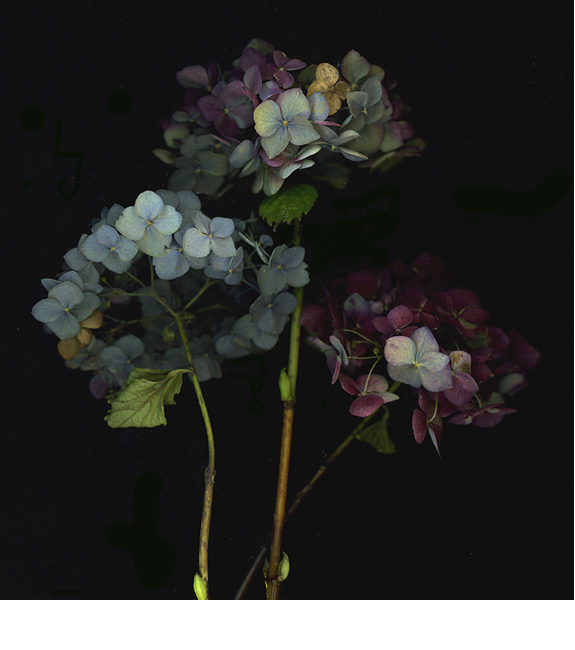
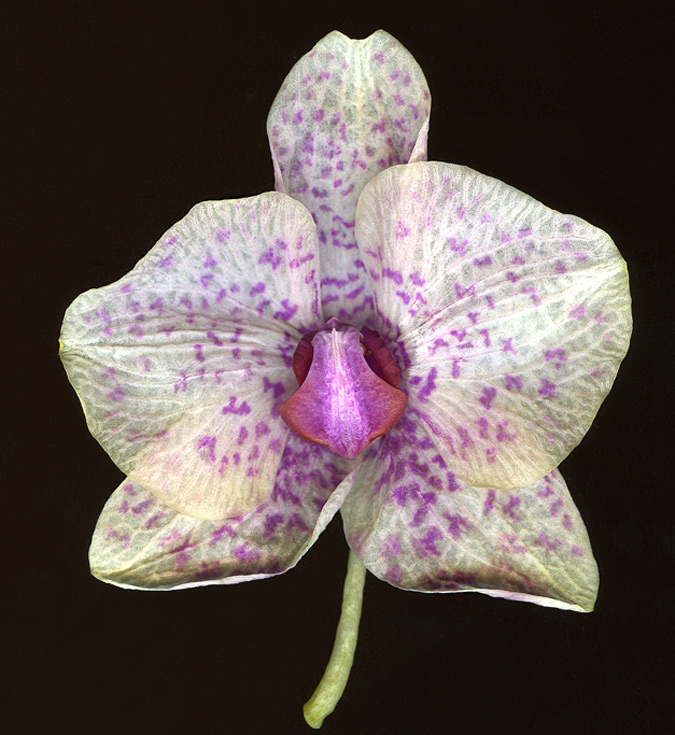
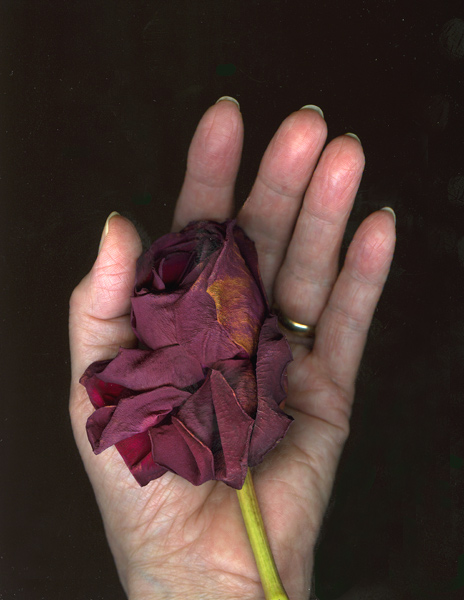
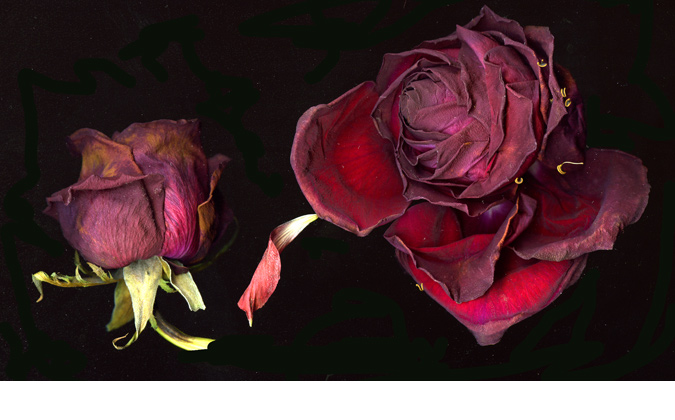
hippeastrum, withering


this flower a few weeks later....
bittersweet beauty in the dying,
like the transparent skin and veins
of an ancient elder's hands
textures of home #2, Photoshop


If you are a photographer and PhotoShop user like I am,
you may enjoy this interesting article by David Pogue:
Photoshop and Photography: When Is It Real? in the New York Times
With thanks to Finnish author Anita Konkka
P.S. No, there's no fancy photoshopping of the above images, just the usual resizing for the web. Thanks for asking!
acknowledge the past

As most of you know, the Winter Olympics have been underway here in the Vancouver region. I haven't commented much on it for I'm one of the folks that's been against it mostly because of the extreme costs, commercialism and over-zealous security. However, I have been enjoying some aspects of it, watching a few events from the comfort of home. I always enjoy the opening ceremonies, and this one was quite good, very inclusive of our First Nations hosts.
But there have been criticisms by other ethnic groups in our country who feel they've been excluded. I've had some similar though less extreme thoughts but have hope for the closing ceremonies. I love the response by Stephen Hume, my favourite columnist in our local newspaper. As always he writes thoughtful and well-researched articles and this has to be one of his best: Acknowledge the past, but don't try to remake it. Anyone upset about a lack of French in opening ceremony should learn about B.C.'s other settlers.
It's long but gives a great and sometimes surprising historical picture of British Columbia's multicultural roots and some of the conflicts that have arisen from time to time. If this subject interests you, please read and comment.
P.S. I forgot to add another fascinating article by Hume, also concerning the opening ceremonies: Tripod glitch fit nicely with Olympic tradition; Ancient Greeks would have appreciated the symbolism since the tripod has a long association with the Games.
textures of home


I look closely around home
I see with new eyes